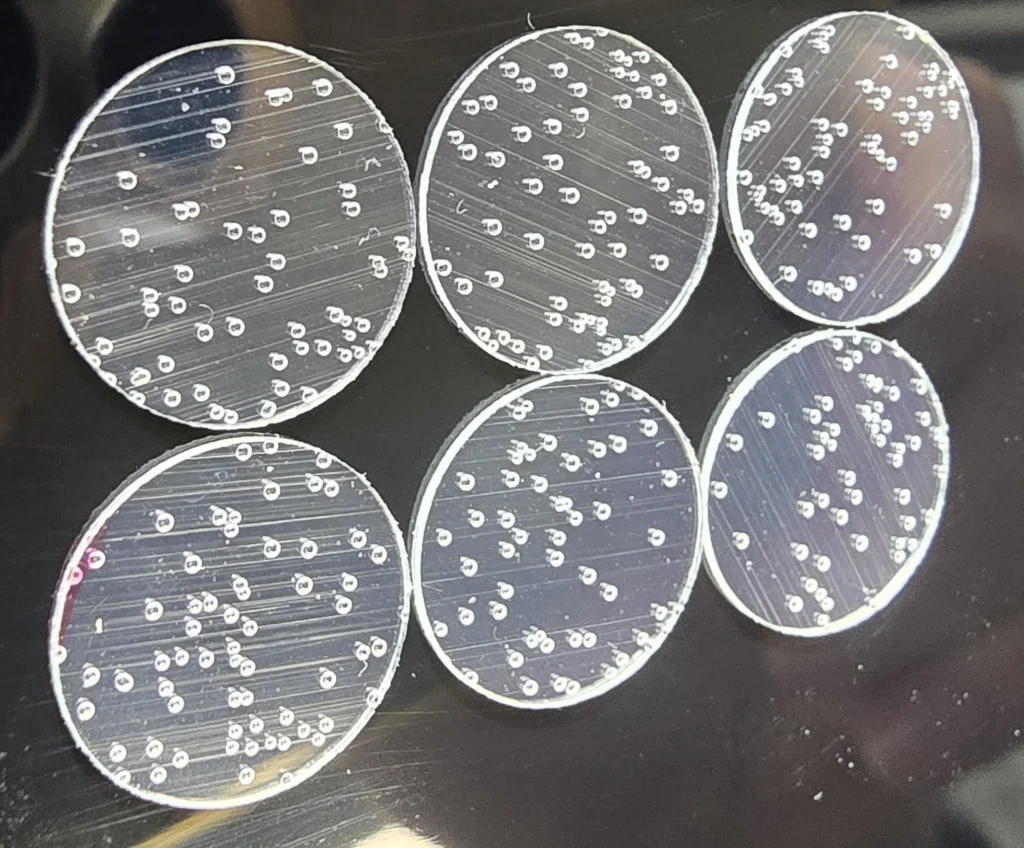
IN A COPYABLE WORLD

Proving the origin.
Of information. And of requests.

PROOFTAG Digital is preparing to extend the experience gained with the Code à Bulles® / Bubble Tag® in protecting the origin of physical objects to the realm of information.
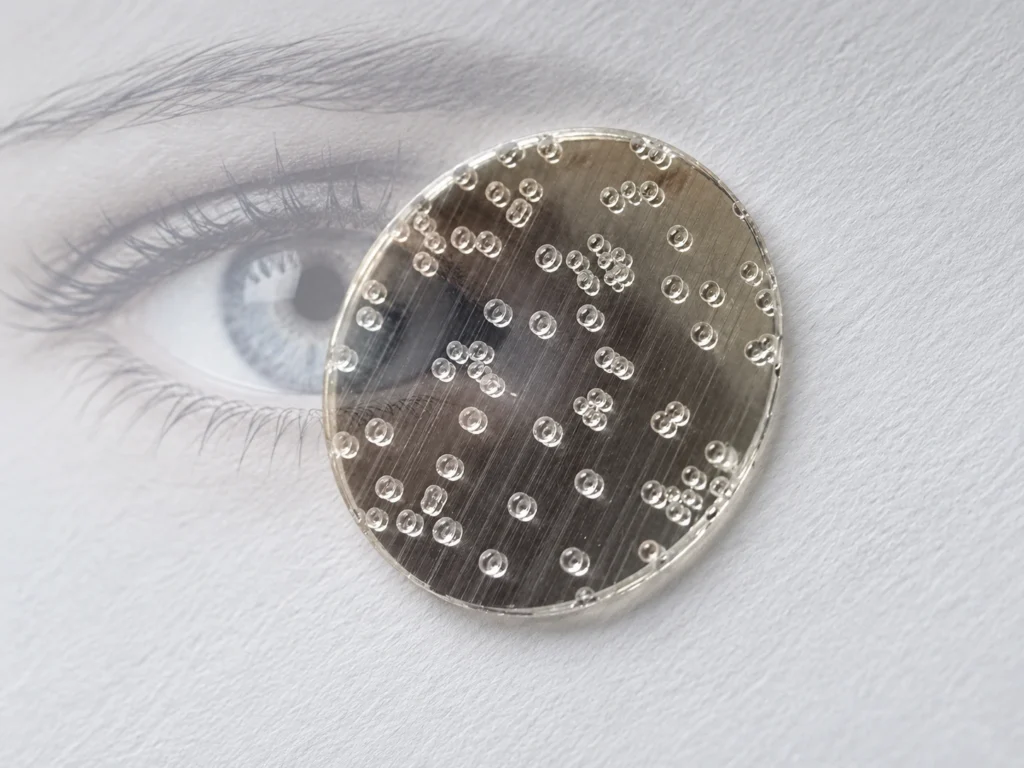
Code à Bulles® / Bubble Tag® Prooftag
Conceptual illustration — a CAB and a human eye, created with the assistance of AI.
AN ESTABLISHED FOUNDATION
Over twenty years of experience in authenticating physical objects.
OUR AMBITION
Strengthen digital evidence through verifiable physical origin.

01 / THE CHALLENGE

Appearance alone is no longer
enough to establish trust.

A document may look authentic. A request may seem legitimate. The question remains the same : where do they actually come from ?

01 — GENERATIVE AI

The false becomes
plausible.

Text, voices, documents: AI can be misused to impersonate a source or make a fraudulent request more convincing.

02 — STOLEN DATA

Genuine data can enable
impersonation.

An accurate name, record or supporting document can be used to make a fraudulent relationship appear legitimate.

03 — DIGITAL EVIDENCE

Verify more
than appearances.

Origin, integrity, validity and context must be examined together. Accurate information does not, on its own, confer a right to act.

Does what is presented, used, transmitted, claimed or requested genuinely come from the right source ?                                     ↗

The central argument of the public white paper, chapters 1–6. Read the white paper and its references.

02 / Both sides of the exchange

Prove what is transmitted. Verify who is requesting it.

Authentic evidence can be produced in response to a fraudulent request. Trust must encompass the issuer and the requester.
REQUEST SIDE

Who is requesting the information ?

Does the request genuinely come from the person or organisation it claims to represent ?

⇄

RESPONSE SIDE

Who issued the document ?

Is the information received genuinely linked to the stated source and to this version of the content ?

An authentic requester is not automatically authorised. Recognising a source does not establish everything it is entitled to request or transmit.
REQUEST SIDE

What authority does the requester have ?

Are this organisation and this individual authorised to obtain this information for the stated process ?

⇄

RESPONSE SIDE

What authority does the issuer have ?

Is the issuer authorised to produce this item and transmit it to this recipient ?
Authorisation must be checked separately from origin. Knowing a source’s true identity does not justify every collection, disclosure or use of information.
REQUEST SIDE

For what purpose ?

Are the stated reason, the information requested and the recipient consistent with the intended process ?

⇄

RESPONSE SIDE

Within what scope of use ?

Do the validity period, recipient and conditions of use match what has been agreed ?
Verifying evidence also means examining its scope: for whom, for what purpose, until when and under which conditions.
Explanatory diagram based on the white paper. It describes a requirement for trust, not an online verification service or an existing standard.
Code à Bulles® / Bubble Tag®

Code à Bulles® / Bubble Tag® — a physical technology developed by PROOFTAG.

03 / INDUSTRIAL CREDENTIALS

Before information, experience with physical objects.

PROOFTAG has built its expertise in the authentication and secure traceability of physical objects, particularly fine wines and valuable goods.
20+ years of industrial experience
in protecting the origin of physical objects

The Code à Bulles® / Bubble Tag® provides a unique physical structure that can be observed and measured. Resistance to identical reproduction is central to the property claimed for this technology.

An established body of experience, not automatic validation of every future digital application.

04 / The PROOFTAG Digital ambition

The same guiding principle.
A new field of application.

Explore physical-digital proof of origin : a contribution to digital evidence that complements cryptography, signatures, authentication and provenance.

THE FOUNDATION / PROOFTAG

Protecting the origin
of physical objects.

Strengthen the link between the object presented, its registration record and the expected brand or issuer. Experience with the CAB provides the starting point.

⇄

THE OUTLOOK / PROOFTAG DIGITAL

Proving the origin
of information.

Investigate how verifiable physical origin can strengthen trust in documents, data, requests and critical applications.
Complement, not replace.
Combine origin, integrity, authorisation and context with existing mechanisms.
Evaluate, not overpromise.
Establish the properties of digital applications under appropriate conditions of use.
Prove without revealing everything.
Adapt the proof to the risk and limit the exposure of personal data.

05 / Applications to explore

Where a false claim of origin changes the decision.

Opportunities for collaboration and evaluation, to be defined with the relevant stakeholders. Not a catalogue of available products or a promise of universal security.
DOCUMENTS · INSTITUTIONAL SOURCES

A convincing document is not a verified source.

Examine how a document or instruction is linked to the expected source, while distinguishing its origin, its integrity and the truth of its content.

“Does this information genuinely come from the stated authority ?”

Potential application – subject to evaluation
AI · DATASETS · INSTRUCTIONS

Examine the sources that feed AI systems.

Explore how to verify the origin of data, documents and requests, alongside the evaluation of models and content.

“Which sources and authorisations does this AI rely on ?”

Potential application – subject to evaluation
RIGHTS · AUTHORISATIONS · ACCESS

A recognised document does not confer an unrestricted right to act.

Connect the origin of a right or authorisation with its status, its holder and its conditions of use.

“Was this authorisation issued by the expected source, and is it valid for this use ?”

Potential application – subject to evaluation

REQUESTS · SUPPORTING DOCUMENTS · SENSITIVE EXCHANGES

Verify the request before sharing the evidence.

Examine the requester’s origin, authorisation and purpose before disclosing information or producing a supporting document.

“Who is asking me for this document, with what authority, and for which process ?”
Potential application – subject to evaluation
Effectiveness depends on the controls actually implemented, the applicable permissions and the conditions of use.
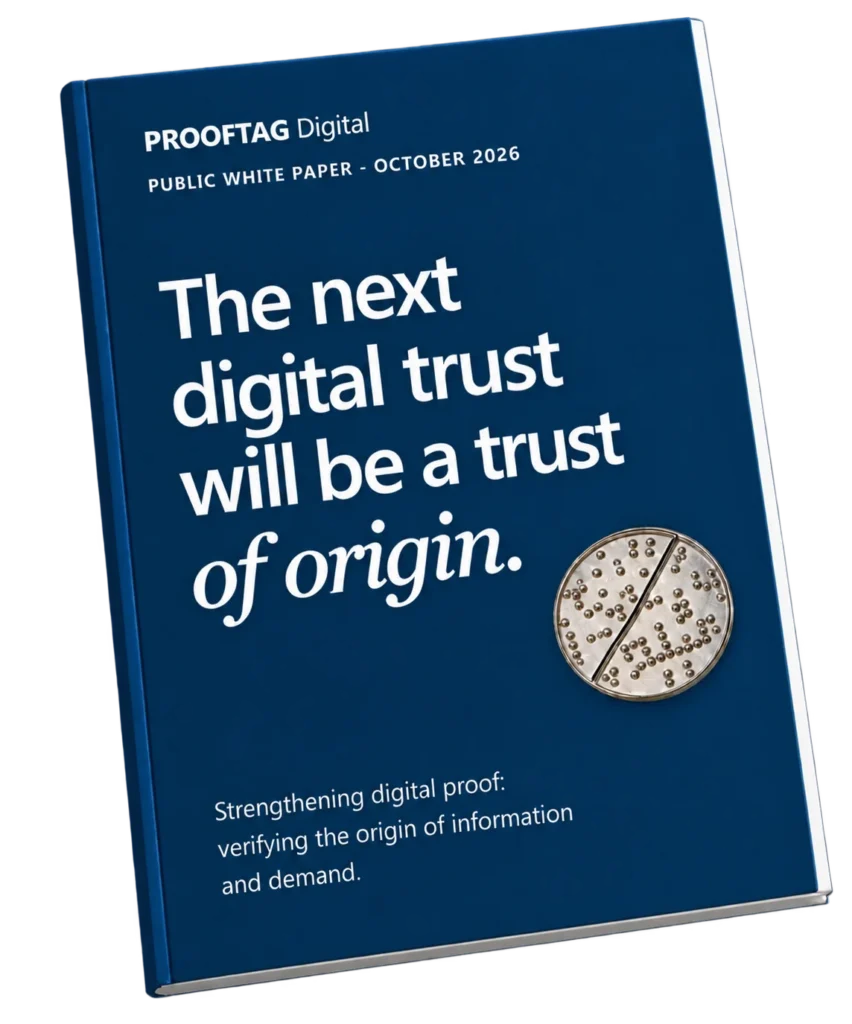
prooftag digital white paper digital trust

06 / The public white paper

The next era of digital trust will be based on origin.

Why verify not only what is transmitted, but also what is requested ? How can origin, integrity, authorisation and purpose be considered together? What can experience with the Code à Bulles® / Bubble Tag® contribute ?

The white paper sets out the need, the potential and the requirements for this approach, without disclosing the proprietary architecture.

PDF · 15 pages · October 2026 edition Free access, with no form or registration.

07 / Key questions

Proof of origin,
clearly explained.

Understand what evidence establishes and what it does not.
Does verified origin guarantee that the content is true ?

No. An authentic source can be mistaken. Proof of origin seeks to establish a link to the claimed source; it replaces neither content analysis nor human judgement.

What is the difference between digital evidence and proof of origin ?

In the white paper, digital evidence comprises verifiable elements that support a claim. Proof of origin is one dimension, to be considered alongside integrity, validity and context.

Why verify the requester as well ?

Because an impersonator may request an authentic document. The requester’s identity, authorisation to obtain the information and purpose must be examined separately.

Does PROOFTAG Digital replace existing solutions ?

No. The programme explores an approach that complements cryptography, signatures, authentication, traceability and provenance. The properties of each application will need to be evaluated.

What stage has the programme reached ?

PROOFTAG Digital builds on the existing industrial uses of the Code à Bulles® / Bubble Tag®. Extending this experience to information is a development and evaluation programme. The public website presents the ambition and potential applications, without claiming general availability or an established security qualification.

08 / Call for collaboration

Building the next
stage of trust.

PROOFTAG Digital has developed a concept for physical-digital proof of origin, based on experience with the Code à Bulles® / Bubble Tag®, with the aim of strengthening digital evidence by verifying the origin of both information and requests.

We are seeking industrial, technology, scientific and institutional partners to develop and evaluate its applications.

Cybersecurity
Artificial intelligence
Digital identity
Industry
Institutions & research

A documented concept.
A confidential briefing.

The concept is set out in a confidential note. It may be shared with qualified contacts following an initial discussion to clarify their interest and potential opportunities for collaboration. Disclosure is subject to PROOFTAG’s approval and an appropriate non-disclosure agreement. Tell us about your organisation, your expertise and the nature of your interest.
The note is not sent automatically. Opens your email application. Nothing is sent automatically. Please do not include sensitive data in your initial enquiry.